THE IDEA
Every seminar and milonga at Tango Exchange comes back to one simple idea:
There has always been more than one “standard” way to enjoy tango.
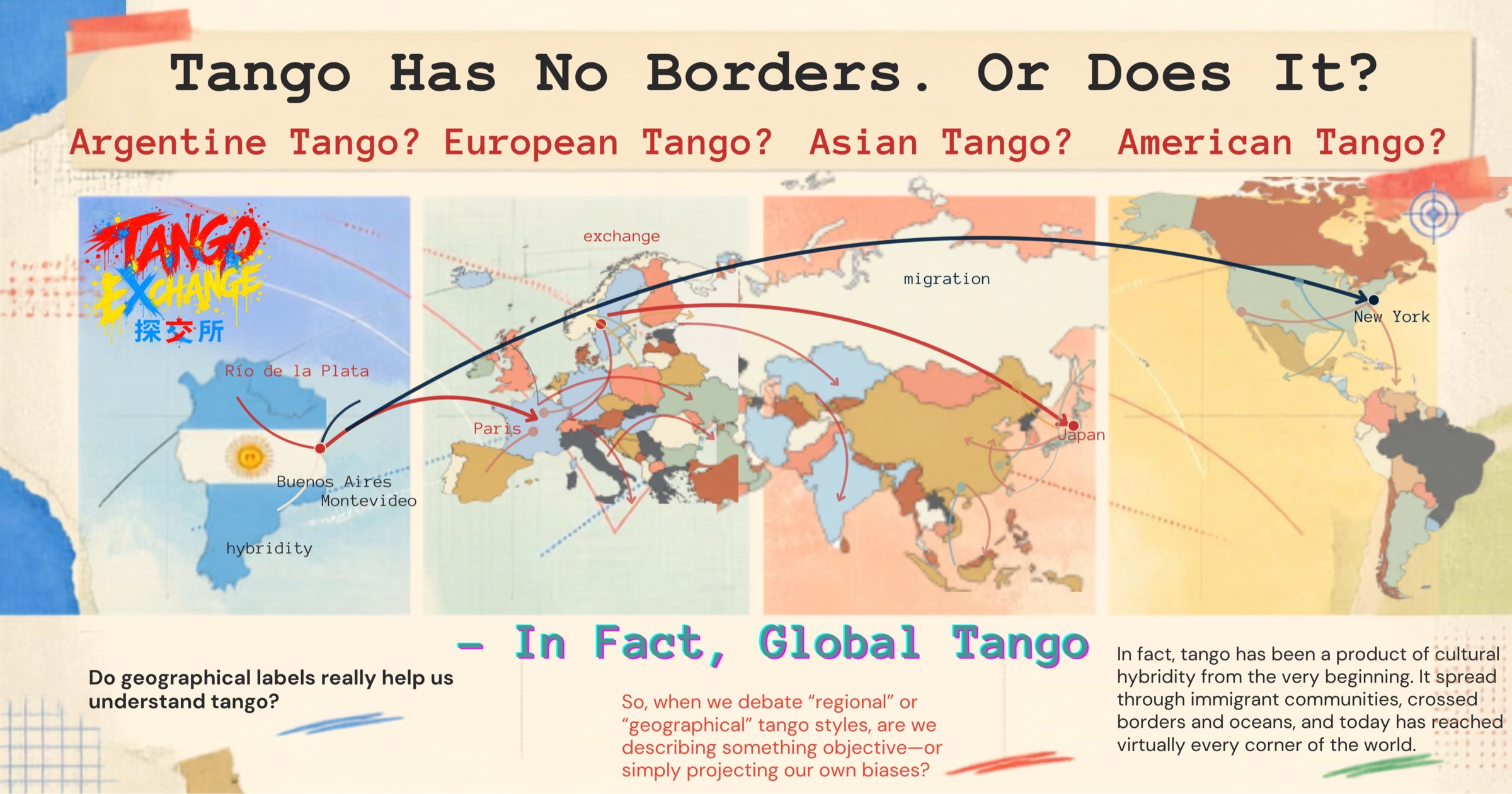
International EXCHANGE of the “national”:
Tango is a product of cultural exchange across borders.
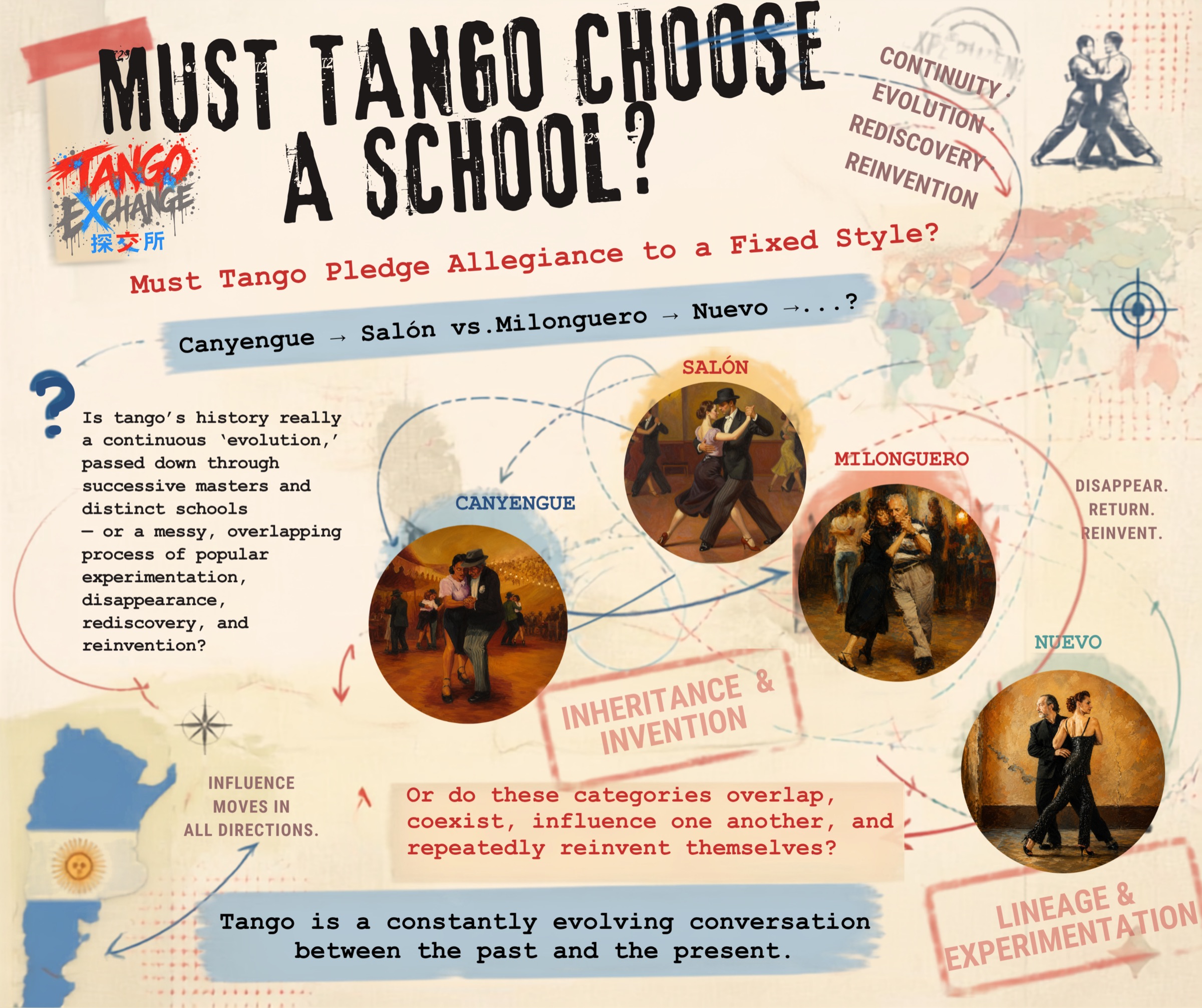
Transformative EXCHANGE of schools and styles:
Tango is a constantly evolving conversation between the past and the present.
Essential EXCHANGE of characteristics and qualities:
Tango is a living conversation between people.
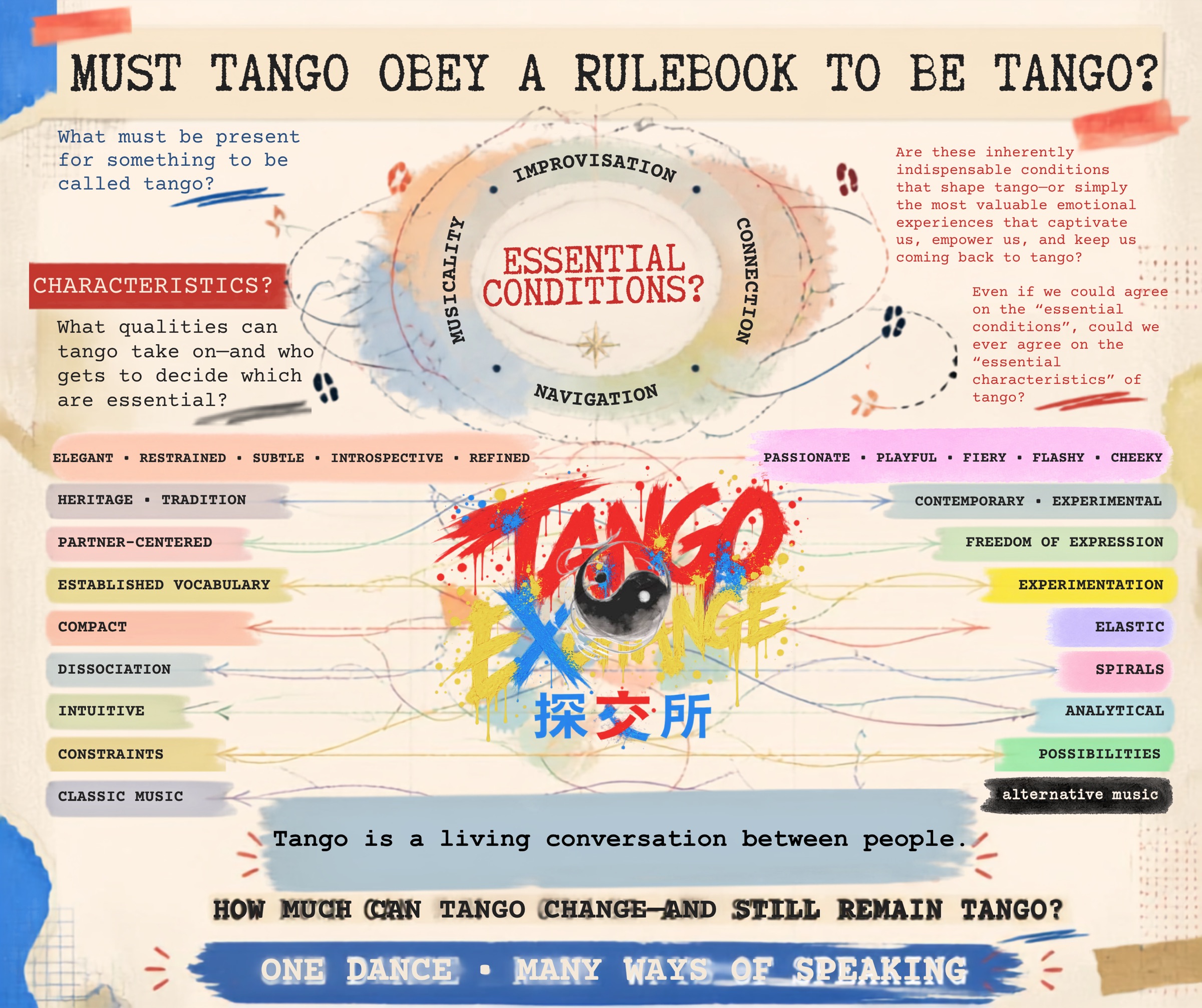
Some schools, styles, characteristics, and qualities may appear contradictory, yet all can coexist as meaningful forms of tango, depending on the dancers, the music, the space, the culture, and the social context. Tango was created among immigrant communities, then carried across borders and oceans through migration and diaspora. Through cultural exchange, collision, and fusion, it continually adapted to different historical periods, social environments, and material conditions.
Perhaps tango’s freedom of expression and rich diversity are precisely what allow it to speak to such different social and psychological needs.
Because tango is, at its heart, a dialogue between people. And people are both relational and individual—we seek empathy and connection, yet we also seek freedom and self-expression.
Tango’s remarkable resilience lies in its ability to absorb new influences, respond to changing circumstances, and continually create new forms of expression. It has survived and spread so widely not because it has one fixed formula, but because it remains a living conversation between people across places, cultures, and generations.