Artists


Artist
Demetrio Scafaria
For me, Tango is not a sequence of steps; it is a discipline of presence.
Coming from an Italian background with a deep respect for tradition and movement, my journey in tango has always been about understanding the human element behind the embrace. Before standardizing a movement, I care about standardizing connection—how two people can share three minutes of absolute truth on a crowded floor without saying a single word.
On Social Dancing: Social tango is my anchor. In the milongas, there is no stage, no spotlight, and no act. It’s an act of deep humility and listening. You surrender your ego to the orchestra and to your partner. My goal on the dance floor is simple: to make my partner feel completely safe, fully heard, and entirely present in the music.
On Teaching: I don’t teach people how to copy my tango; I teach them how to find their own. Technical precision, posture, and musical alignment are essential tools, but they are just the vocabulary. My role as a teacher is to give students the confidence to write their own poetry with that vocabulary. I focus heavily on body awareness, organic movement, and genuine connection—because when the technique becomes second nature, the real emotion can finally surface.
On Performing: Stage tango should never lose the heart of the milonga. Even in a performance with complex dynamics, I seek the quiet intensity of an authentic embrace. It’s not about just showing off speed or trickery; it’s also about sharing an honest story with the audience.
What I want to bring to Hong Kong: Asian tango communities have a remarkable dedication to precision, elegance, and respect for the art form. What I want to share with you is the warmth of the embrace, the freedom to play within the structure, and the courage to dance with your true self. I invite you not just to dance tango, but to let tango reveal who you are.
Demetrio first developed his tango in Southern Italy alongside today’s world-“hottest” tango star, Gianpiero Galdi (GP), in the same study group where Lorena Tarantino also began her tango journey. GP has never hidden his pride in his fellow countryman:
“Demetrio Scafaria has this power of reminding people how much fun tango can be, how intense the social experience and communication can be, how abundant emotions in tango can be, and how crucial feelings are! So many good dancers who danced with him were totally spellbound by the subtlety and musicality of Demetrio’s interpretation!”
Below, three performances he picked himself, and why:
These clips and images capture the essence of what I value most in tango: the clarity of the connection, the musicality, and the quiet intensity of the embrace. They aren't just about technical precision; they reflect the genuine moments where the dance feels alive and honest.
Seminars
- A: Play with Embrace Possibilities
- B: Play with Axis and Free Leg
- C: Play with Speed and Height
- D: Play with Timing and Communication
- E: Play with Demetrio and Panos' Technique
Milongas
- M17 - Show: Saturday milonga with show
- M18 - Show: Sunday milonga with shows


Artist
Dilara Ogretmen
I have always been fascinated by movement—both as a dancer and as a biologist. My academic background is in evolutionary ecology, so I naturally observe how living systems adapt, communicate and respond to their environment. I believe this way of seeing the world has deeply influenced my tango. A dance is never fixed: it evolves from one embrace to another, shaped by two bodies, the music, the space and the particular moment they share.
My identity has also been formed between different cultures. I was born in Germany, grew up with Turkish roots, built my adult life in Berlin and developed an intimate relationship with Argentine culture through tango and my time in Buenos Aires. Perhaps this is why I have never experienced tango as something belonging to only one place or one type of person. For me, tango is a living language—one that carries its history while continuing to change through every person who speaks it.
What first drew me to tango was not the vocabulary of steps, but the possibility of communicating without words. Connection, attention and responsiveness remain at the centre of everything I do. I am interested in what happens when technique becomes so integrated that it no longer restricts us, but gives us freedom: the freedom to listen, to react, to take risks and to express something genuinely personal.
As a social dancer, I value comfort, clarity and generosity. I want the person in my embrace to feel that we are creating the dance together. I do not believe that one person produces the idea while the other simply follows it. Both dancers are continuously proposing, interpreting and influencing the movement. The roles may have different responsibilities, but the dance itself belongs to both people.
In my teaching, I work in a detailed and analytical way because understanding the body matters to me. I am interested in biomechanics, balance, axis, coordination and the organization of movement—but technique is never the final destination. It is a tool that allows dancers to become more available to one another and more independent at the same time. I want my students to understand not only what they are doing, but why it works and how they can adapt it to their own bodies.
I also care deeply about creating an encouraging learning environment. Tango can make people feel vulnerable: we are asked to be close, to improvise and sometimes to fail in front of another person. I want students to feel safe enough to be curious. Rather than producing copies of myself, I want to help them discover their own movement, musicality and personality.
Performing brings another dimension to my tango. I do not want a performance to be only an exhibition of difficulty or physical ability. Technique is important, but what moves me is the humanity inside the dance: tension, tenderness, humour, silence, resistance and trust. I want a performance to feel alive—to contain something that is genuinely happening between two people at that exact moment.
I dance both roles, and this has changed my understanding of partnership profoundly. Experiencing tango from different perspectives has made me more aware of how much responsibility, sensitivity and creativity exist on both sides of the embrace. It has also strengthened my belief that tango becomes richer when we move beyond rigid ideas of what a leader or follower should look like.
If I were to “recommend” my tango to an Asian audience, I would not describe it as a particular style or collection of figures. I would say: come if you are curious about the intelligence of the body, the honesty of the embrace and the freedom that can emerge from a strong technical foundation. My tango is detailed but not rigid, expressive but not disconnected from tradition, and deeply interested in the conversation between two individual human beings.
This will be my first journey to Hong Kong, and I am especially excited about the encounter itself. I do not want simply to bring something already finished and present it to the community. I want to meet the dancers there, understand their questions, feel their energy and allow that exchange to influence what we create together.
Below, four dances she picked herself, in her own words.
Seminars
- A: Play with Embrace Possibilities
- B: Play with Axis and Free Leg
- C: Play with Speed and Height
- D: Play with Timing and Communication
- F: Play with Dilara and Maria's Technique
Milongas
- M16 - DJ: Friday milonga with show
- M17 - Show: Saturday milonga with show
- M18 - Show: Sunday milonga with shows


Artist
Maria Mastoropoulou
For us, tango is a conversation between two people who don't know what the next sentence will be.
We love the playfulness of it, the musicality, the improvisation, the humour, and above everything else, the embrace.
We think of a tango as a small door into a ten-minute journey of honesty, vulnerability, joy and affection. You meet someone, often a complete stranger, and for those few minutes you share something incredibly intimate without needing to say a single word. You touch another human being and use all your senses to "listen".
For us, the embrace is where everything begins. It can be tight and soft at the same time. It can give complete freedom while offering complete security. It has so many colours, depths and possibilities, and we feel that sometimes dancers become so focused on steps, technique or shapes that they forget how much there is to discover simply by embracing another person.
When we dance socially, our biggest wish is to make our partner feel completely free, yet completely safe. To feel that they don't need to worry about what comes next. They can simply listen, respond and be present in the embrace.
Perhaps this is also where our personalities meet in our tango. Panagiotis brings playfulness while Maria brings depth. There is a natural contrast between us, but it is also what makes dancing together interesting. One brings curiosity and play, the other brings feeling and presence. Somewhere between the two, our dance happens.
Maria also brings more than fifteen years of experience as a tango teacher. Throughout those years, she has taught and worked extensively from both sides of the embrace — leading and following — and she feels equally comfortable in both roles.
That experience has given her something that goes beyond knowing how to teach technique. After so many years, she has developed a very strong sense of what works, what doesn't, and, perhaps most importantly, what a particular dancer actually needs at the point where they are in their tango journey.
Her teaching is therefore very structured, but never generic. Over the years she has developed, tested, adapted and perfected a system of exercises designed to address specific aspects of dancing and help each student understand them through their own body.
She doesn't believe that everyone needs to learn the same thing in the same way. A beginner, an intermediate dancer and an experienced dancer can be struggling with completely different things, even when they appear to be doing the same movement.
For her, teaching is about seeing that difference.
Seminars
- A: Play with Embrace Possibilities
- B: Play with Axis and Free Leg
- C: Play with Speed and Height
- D: Play with Timing and Communication
- F: Play with Dilara and Maria's Technique
Milongas
- M16 - Show: Friday milonga with show
- M17 - DJ: Saturday milonga with show
- M18 - Show: Sunday milonga with shows


Artist
Panagiotis Triantafyllou
Being an engineer, Panagiotis naturally looks for mechanisms, structures and the reasons behind things. He approaches tango in much the same way. He likes to understand what is actually happening between two bodies in an embrace — how intention travels, how balance changes, how movement is initiated and received, and why something feels effortless when it works well.
In a way, he tries to "decode" tango: to take something that can initially feel mysterious or intuitive and understand its underlying mechanisms well enough that it makes sense. Not in order to turn tango into a formula, but because understanding how something works gives him more freedom to play with it.
The more he understands the structure underneath the movement, the more possibilities he sees for improvisation, playfulness and connection.
In that sense, our approaches complement each other. Maria has spent years observing people and understanding how different bodies and minds learn. Panagiotis is constantly trying to understand the mechanisms underneath the movement. Together, we are interested not only in what happens in tango, but why it happens and how we can help another person discover it for themselves.
But the mechanism is never the point. The point is still the human being in the embrace.
And perhaps one of the things we value most about tango is the strange beauty of coincidence.
Every person we dance with has travelled through an entirely different life to arrive at that particular moment. Maybe we will never meet again. Maybe we don't even know each other's language. Yet, for ten minutes, our lives become one.
That is what we want our tango to be.
Not a demonstration of what we know.
Not a collection of movements.
Just two people listening to each other, being playful, being honest, and being completely present in the moment.
If we had to describe what we want our partner to feel, the answer is surprisingly simple:
Panagiotis wants them to feel love and care.
Maria wants them to feel love and care.
Panos found Argentine tango in Thessaloniki while studying electrical engineering, and the engineer never left the dance. He reads tango through biomechanics, physics and movement analysis, looking for the most efficient way a body can move, and then puts all of that analysis in the service of something simpler: a clear conversation between two people.
Followers describe his embrace as immersive and surrounding, yet light, stable and free. Known for his musical interpretation, his precise leading and that distinctive embrace, he dances for clarity, comfort and deep connection, blending the analyst's understanding with the poetry of tango so that a dancer feels technical refinement and emotional expression at the same time.
He teaches tango as a conversation rather than a sequence of movements. His classes work on the mechanics behind each movement; on balance, axis and body awareness; on clear, comfortable communication between partners; on technique as a tool for musical expression; and on improvisation born of listening. The engineering background lets him break complex movements into principles anyone can grasp, so dancers leave more aware of their own body and of their partner's.
Dancing since 2012, Panos now teaches classes, workshops and private lessons to dancers of every level, and writes teaching material grounded in biomechanics, movement efficiency and the social principles of tango. Since 2023 he has been growing the tango scene of Kalamata, the town he calls home, through Tango Impro Kalamata: regular classes, prácticas and social events that link local dancers to the wider international community.
He is also one of the people behind two of Greece's international tango gatherings. Since 2018 he has co-organised Los Higos Tango Marathon in Kalamata, shaping its artistic vision around high-quality social dancing and coordinating everything from guests and DJs to venues, accommodation and registration. Since 2017 he has co-founded and run Tango Nomads, a travelling gathering that lands in a different Greek destination each edition so visiting dancers and local communities can merge; in 2019 he also co-organised Stockholm's Epic Tango Marathon. From Stockholm to Warsaw, Vienna to Uppsala, he is a familiar face on the European marathon and festival circuit.
Seminars
- A: Play with Embrace Possibilities
- B: Play with Axis and Free Leg
- C: Play with Speed and Height
- D: Play with Timing and Communication
- E: Play with Demetrio and Panos' Technique
Milongas
- M16 - Show: Friday milonga with show
- M18 - Show: Sunday milonga with shows
- M19 - DJ: After party

Photographer
Kappu Chino
When we still used film cameras, every family kept photo albums at home. Ours had old black-and-white pictures of my father and mother when they were young. I looked at them many times as a child, and they never meant much.
Then one day, much older, I opened the albums by chance and got stuck on one photo. It was my father, and judging by the date, he was much younger in it than I was now. My father, younger than me? A strange feeling. If he had been my age, maybe he would have liked to hang out with friends, go for a drink, sit in classes at university, just like me. What did he want to be when he grew up? It may have been the first time I saw my father as a person, not as my father.
I don't know who took that photo. But a picture someone took can still carry meaning for me decades later. Neither that person nor I is a professional photographer. Still, I take many photos of people dancing, and some of them are good. One day, a long time from now, someone may look at one and think of their parents or grandparents as a person, the way I did. I would be happy if my photos gave someone a moment like that, even though I will never know it.
Kappu Chino does not dance tango, but he has photographed it since 2012, first in Korea. After the Singapore and Hong Kong tango marathons in 2016 he became one of Asia's best-known tango photographers. Where he has shot:
2016 · Singapore Tango Marathon · Hong Kong Tango Marathon
2017 · Vietnam Tango Marathon · Thailand Tango Festival · J Tango Marathon (Taipei) · Busan Tango Marathon · Hong Kong Tango Marathon · Beijing Tango Marathon
2018 · Taiwan Tango Marathon · Vietnam Tango Marathon · Westlake Tango Weekend (Hangzhou) · Taipei Tango Weekend · Busan Tango Marathon · La Media Luna Tango Marathon (Tokyo) · Shanghai Tango Festival · Beijing Tango Marathon · Spicy Tango Weekend (Chongqing) · Hong Kong Tango Marathon
2019 · Taiwan Tango Marathon · Vietnam Tango Marathon · Shenzhen Tango Maracuentro · Beijing Tango Festival · Singapore Tango Marathon · Thailand Tango Festival · Busan Tango Marathon · Shanghai Tango Festival · Daegu Tango Marathon · Spicy Tango Weekend (Chongqing) · Tango Origin Celebration (Taipei) · Beijing Tango Marathon · Chengdu Tango Festival · Hong Kong Tango Marathon · Shanghai Tango Marathon · Tango in Paradise (Bali)
2020 · Bangkok Tango Marathon
2022 · Busan Tango Marathon · Indonesia Championship Preliminaries · Daegu Tango Marathon
2023 · Vietnam Tango Marathon · SYJ 2nd Anniversary Party (Beijing) · A Week of Tango in Bali · Shanghai International Tango Festival · Daegu Tango Marathon · Beijing Tango Marathon · Spicy Tango Weekend · Singapore Tango Festival · Quanzhou Tango Festival
2024 · Korea Tango Championship · Amelia & Matthew Workshop Grand Milonga (Beijing) · Vietnam Tango Marathon · Oriental Tango Congress & Championship (Beijing) · Daegu Tango Marathon · Pacific Tango Championship · Tango in Bali (Indonesian Championship Preliminary & Tango in Paradise) · Busan Tango Marathon · Hong Kong Tango Challenge
……
Program
Thursday 15 October
| A |
19:30–22:45
break 21:00–21:15
|
All four teachers
|
Danzstage |
Friday 16 October
Saturday 17 October
| B |
16:00–19:15
break 17:30–17:45
|
All four teachers
|
Dance Concept |
| M17 | 21:30–02:00 |
Saturday milonga with show
Show: Demetrio & Dilara · DJ: Maria
|
Danzstage |
Sunday 18 October
Monday 19 October
No sessions match the selected filters.
Seminar A · Thu 19:30–21:00 · Thu 21:15–22:45
Play with Embrace Possibilities
All four teachers
The embrace is much more than the physical connection between two dancers. It is a dynamic communication system that can influence direction, balance, timing, movement quality, and the degree of freedom available to both partners.
In this class, we explore the evolution, functions, and possibilities of the tango embrace, looking at how different forms of connection have emerged throughout tango history and how they relate to different musical and movement languages.
Rather than treating the embrace as a fixed position, we will investigate how subtle changes in its geometry, elasticity, and organisation can open completely different movement possibilities.
We will explore, among other things
- How information can be transmitted through the embrace and how the follower can receive and interpret a lead with greater sensitivity.
- The relationship between square and V-shaped embraces and the different movement possibilities they create.
- Historical and contemporary approaches to the embrace, including the Canyengue-inspired arm position around the leader’s waist.
- Using a flexible embrace to access challenging directions, such as back sacadas to the less familiar side.
- Double-front and shadow positions as alternative configurations of connection.
- Soltadas and moments in which the dancers temporarily release conventional physical contact.
The goal is not to find the “correct” embrace, but to understand what each configuration makes possible — and to develop the ability to consciously choose the connection that best serves the movement, the music, and the relationship between partners.
Venue: Danzstage
Seminar E · Fri 19:30–21:00
Play with Demetrio and Panos' Technique
Teachers: Demetrio, Panos
A special exploration of the technical languages and improvisational approaches of Demetrio and Panos.
Rather than attempting to reproduce a particular “style,” we will identify and investigate the technical principles, movement qualities, and creative strategies that make their dancing distinctive.
The class will explore how technique can create greater freedom in improvisation, examining elements such as
- organisation of the axis and off-axis movement,
- dynamic changes and musical responsiveness,
- preparation and release,
- use of space and body level,
- elasticity and suspension,
- and the transformation of technical structures into spontaneous expression.
Participants will be encouraged to understand why these movements work, rather than simply copying their external appearance.
The aim is to take useful principles from their dancing and discover how those principles can become tools within your own movement vocabulary.
Venue: Danzstage
Seminar B · Sat 16:00–17:30 · Sat 17:45–19:15
Play with Axis and Free Leg
All four teachers
What happens to the free leg when the organisation of the axis changes?
This class explores the relationship between axis, balance, weight, and the free leg, with particular attention to the movement that happens internally before it becomes visible as a step.
We will investigate how changes in the organisation of the body can transform the same basic movement into completely different physical and aesthetic experiences.
Through examples such as
- Volcadas: comparing a free leg that hangs naturally with an apilado organisation in which the free leg crosses backwards and can appear as an embellishment.
- Colgadas: exploring the free leg “flying” through space versus collecting into a shared-axis or “sandwich” position.
- Ganchos: comparing repetitive on-axis possibilities with off-axis variations, including volcada-based and colgada-based approaches inspired by different contemporary tango techniques.
The emphasis is on understanding where movement originates, how it travels through the body, and how the free leg responds to the organisation of the axis.
Rather than treating embellishments and variations as isolated tricks, we will use them to develop a deeper understanding of balance, suspension, elasticity, and shared structure.
Venue: Dance Concept
Seminar C · Sun 16:00–17:30 · Sun 17:45–19:15
Play with Speed and Height
All four teachers
Musical interpretation is not only about what we dance, but also how quickly, slowly, high, low, sharply, or continuously we move.
In this class, we explore speed and body level as tools for creating contrast, tension, release, and musical expression.
Acceleration, deceleration & suspension
How can we accelerate without losing organisation? How can we slow down while maintaining momentum and muscular tone? And how can we interrupt movement completely to create a meaningful freeze?
We will investigate the relationship between force, momentum, muscle tone, balance, and timing to make changes in speed intentional rather than accidental.
Different qualities of jumping
We will compare different approaches to jumps — from a classic sentada to larger preparatory actions and small, precise, “crispy” jumps — examining how preparation, impulse, suspension, and landing affect the character of the movement.
Changes in body level
How can lowering, rising, or changing the vertical organisation of the body become part of musical interpretation?
We will explore dynamic changes in body height inspired by approaches seen in the dancing of artists such as Panos, Horacio Godoy, and others, investigating how vertical movement can become an integral part of musical phrasing rather than merely a technical effect.
The objective is to expand your dynamic vocabulary so that musical interpretation can be expressed not only through steps, but through the physical qualities of movement itself.
Venue: Danzstage
Seminar F · Mon 14:15–15:45
Play with Dilara and Maria's Technique
Teachers: Dilara, Maria
A special exploration of the technical and artistic approaches of Dilara and Maria, focusing on movement that combines clarity, power, sensitivity, and individual expression.
Their approach is rooted in the idea that technique should not restrict expression — it should create the physical possibilities that allow expression to become freer, more precise, and more personal.
The class will explore
- Efficient use of the body: understanding how alignment, grounding, dissociation, and weight transfer can create movement with less unnecessary effort.
- Power without force: developing the ability to generate and transmit energy while maintaining elasticity and responsiveness.
- Dynamic contrast: working with changes in intensity, speed, suspension, and movement quality.
- Individual musicality: developing the capacity to interpret the same musical information through different physical qualities rather than relying on predetermined sequences.
- Freedom within structure: understanding how a clear shared framework can actually create more space for individual expression.
- Communication through movement: using subtle changes in tone, timing, direction, and quality to communicate rather than relying exclusively on conventional leading and following mechanisms.
- Embellishment as movement: treating adornments not as additions placed on top of a step, but as natural expressions emerging from balance, musicality, and the dancer’s own physical vocabulary.
A central idea of this class is empowerment through technique: developing enough physical understanding and control that dancers can make genuine artistic choices instead of simply reproducing movements they have been taught.
The goal is not to leave the class dancing “like Dilara and Maria,” but to leave with more tools to discover what your own tango can be.
Venue: Danzstage
Seminar D · Mon 16:00–17:30 · Mon 17:45–19:15
Play with Timing and Communication
All four teachers
Tango is often described through the roles of “leader” and “follower” and through the idea of one person initiating while the other responds. But what happens when we begin to explore the space between those roles?
This class investigates timing, communication, freedom, and responsiveness as collaborative processes.
Playing with timing
We will explore situations in which the leader and follower interact with different layers of musical timing — for example, alternating between rhythmic and melodic interpretations or deliberately arriving at different moments within the same phrase.
The objective is to develop the ability to remain connected even when both dancers are not expressing the music in exactly the same way.
Playing with communication
How can a follower propose an idea without counter-leading? How can a leader create enough freedom for the follower’s individuality to emerge?
We will explore a framework in which the leader determines the direction and environment, and the follower can influence the timing, quality, and expression within that environment.
This creates a form of communication in which the follower’s musicality, movement quality, and physical potential become active components of the dance.
What does freedom mean?
Freedom in tango does not mean simply doing whatever you want.
It emerges when two dancers are sufficiently connected that they can understand, anticipate, adapt to, and support one another. When both dancers are operating on the same “wavelength,” the need to control every detail decreases — and genuine freedom of expression becomes possible.
Reading your partner
We will work on developing sensitivity to your partner’s:
- ground connection,
- physical boundaries and limitations,
- movement intentions,
- understanding of structures,
- and changing responses.
Different modes of connection
We will investigate different qualities of physical connection, including absorption and compactness, as well as connection and apparent isolation within the body.
The question is not simply “Are we connected?” but rather: what kind of connection does this movement require?
Clarity without force
Clear communication does not necessarily require a stronger lead.
Instead of magnifying the option we want, we can often make communication clearer by reducing competing possibilities — organising the available space so that the intended movement becomes easier to perceive.
How can the follower propose a change?
A proposal can emerge through a change in movement quality, rather than through an attempt to redirect the partner.
For example, a follower might transform a movement from melodic to rhythmic, or from continuous to suspended. The key is to introduce the proposal gradually enough for the leader to perceive it, interpret it, and respond.
Ultimately, this class explores tango as a conversation rather than a one-way transmission of information.
Venue: Danzstage
Prices
Seminars
|
A
3 hrs
|
All four teachers
|
HK$600 |
|
B
3 hrs
|
All four teachers
|
HK$600 |
|
C
3 hrs
|
All four teachers
|
HK$600 |
|
D
3 hrs
|
All four teachers
|
HK$600 |
|
E
1.5 hrs
|
Demetrio, Panos
|
HK$300 |
|
F
1.5 hrs
|
Dilara, Maria
|
HK$300 |
Milongas
|
M16
4.5 hrs
|
Friday milonga with show
Show: Maria & Panos · DJ: Dilara
|
HK$260 |
|
M17
4.5 hrs
|
Saturday milonga with show
Show: Demetrio & Dilara · DJ: Maria
|
HK$260 |
|
M18
4.5 hrs
|
Sunday milonga with shows
Show: all four · DJ: Alfredo
|
HK$260 |
|
M19
4 hrs
|
After party
DJ: Panos
|
HK$160 |
Packages
Pass discounts are yours until Mon 12 Oct, 23:59Seminar Pass
HK$2,200
Includes: A, B, C, D
Technique Pass
HK$550
Includes: E, F
Milonga Pass
HK$720
All four milongas.
Includes: M16, M17, M18, M19
All In Pass
HK$3,200
Includes: A, B, C, D, E, F, M16, M17, M18, M19
DJs
DJ
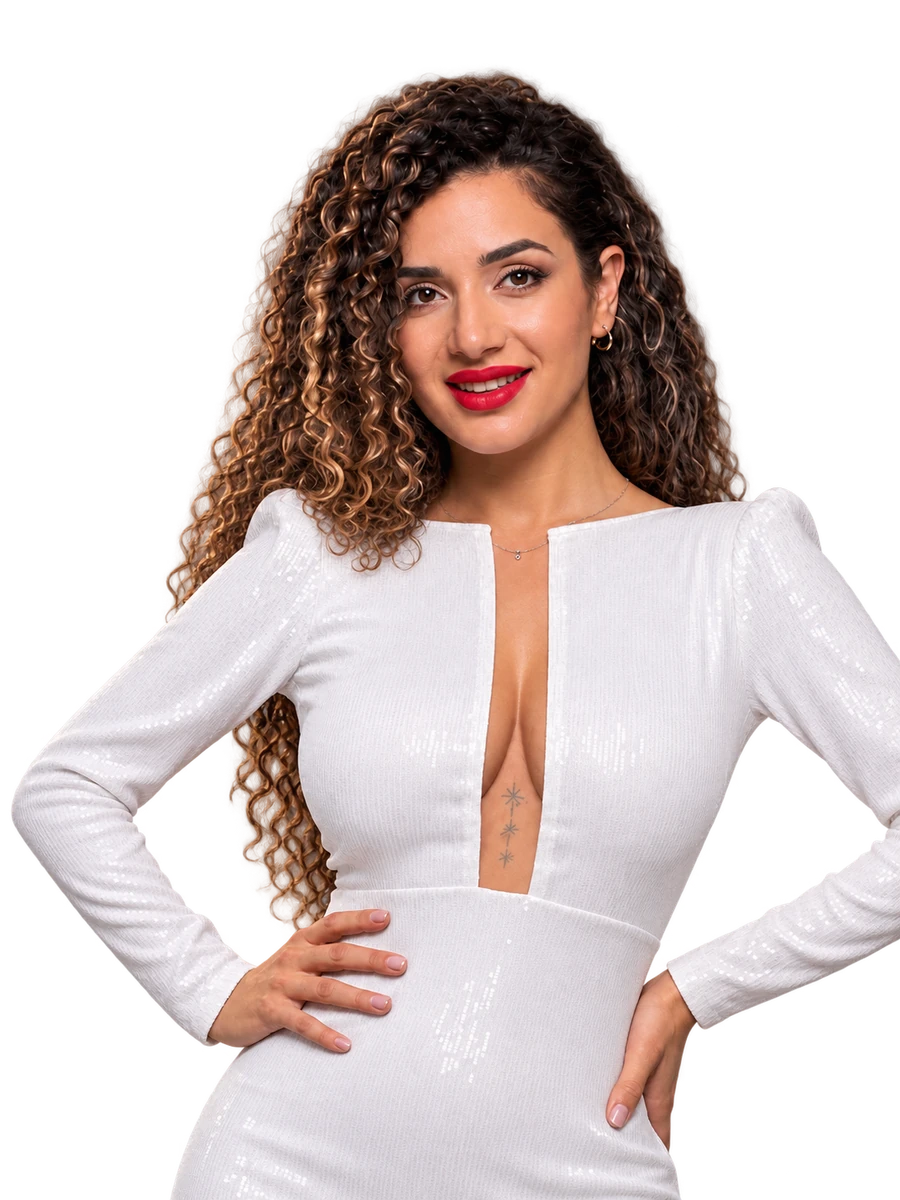
Dilara Ogretmen
Dilara's relationship with tango music began on the floor, long before she thought of herself as a DJ. She met the orchestras physically, through the way each one changed her posture, her energy, her embrace and her imagination. DJing grew out of that quite naturally, as a way of dancing with the whole room at once.
She does not think of the music as a playlist prepared for people to consume. To her the milonga is a living organism: the dancers, the atmosphere, the time of night, even the architecture of the room all influence one another, and the DJ's job is to notice those relationships and respond to them. She may arrive with ideas, but she has no interest in imposing a pre-written emotional journey on the floor.
Between tandas she listens. Sometimes a room needs intensity; sometimes warmth, elegance, playfulness or simply space to breathe. The best tanda is rarely the one with the rarest recordings or the cleverest musical idea. It is the one that arrives at the right moment and makes people want to find one another. Dilara plays for social dancers to enjoy, which, she is the first to admit, is not always what she likes to listen to or to perform to.
Her foundation is traditional, and she cares about the identity, rhythmic character and emotional world of each orchestra. But tradition is not repetition on autopilot. The same recording becomes a completely different experience depending on what comes before it, what follows it and who is in the room. For Dilara, DJing is the art of building relationships: between songs, between tandas, between dancers and moments. Everyone is free to dance to whatever music they feel connected to; she simply finds that the traditional repertoire already contains everything one could need.
Teaching and performing leak into her DJing in useful ways. Teaching has trained her to notice how different rhythmic structures land in the body; performing has made her sensitive to drama, contrast and timing. Social dancing, though, remains the reference that outranks both. The music is chosen first and foremost for the people on the floor.
She is not there to demonstrate how much music she knows. She is there to create trust. When dancers trust the musical direction of the evening, they relax, take risks and become more present in their embraces. The floor she is after feels coherent without becoming predictable, emotionally rich without turning heavy, energetic without losing intimacy. And she takes the communal side of the job seriously: a DJ shapes who feels invited onto the floor and how long the energy stays open. Her aim is a musical space where experienced dancers keep discovering new details while newer dancers still feel welcomed and inspired.
In the end she understands DJing as one more form of improvisation. Teaching communicates through words and movement, performing through a partner and an audience, DJing through selection, sequence and atmosphere. In all three the essential question is the same: is she truly listening?
Selected DJ dates: Berlin's local milongas (2022 to now) · Krakus Aires Tango Festival, Kraków (2024, 2025) · Haciendo Tango Festival, Cipolletti, Argentina (2025) · GoTango Poznań Festival, international DJ team (2025) · Herencia del Tango, Prague (2025) · Tango Studio 15th Anniversary Celebration, Jordan (2026) · Berlin Festival Milonguero (2026) · Alto Tango Milonga, Hamburg (2026).
For Hong Kong she plans to bring music deeply rooted in tango's tradition, selected with a sharp ear for the dancers actually standing in front of her. She is curious about the particular energy of the local community and wants to build the evening together: one tanda, one embrace and one changing moment at a time.
Playing at
- M16 Friday milonga with show — Fri 21:30

DJ
Maria Mastoropoulou
Greece
Maria Mastoropoulou lights up the room the very moment she steps behind the console. With her explosive energy, sharp musical intuition, and unmistakable rhythm, she instantly becomes one of the most unforgettable DJs on any marathon lineup.
Her tandas flow with a perfect blend of modern sparkle and classic elegance — keeping dancers alert, excited, and craving just one more.
Maria doesn't simply play music; she commands the atmosphere. She reads the room with magnetic precision, lifts the energy at the exact second it's needed, and turns the dance floor into a vibrant, electric celebration.
When Maria Mastoropoulou is in charge of the music, one thing is certain:
No one wants to leave the floor!
Get ready… her dynamic power, fiery rhythm, and joyful spirit will make your tango night unforgettable!
Selected DJ dates: Los Higos Tango Marathon, Kalamata · Patras Tango Marathon · Tangueros Tango Marathon, Thessaloniki · Krakus Aires Tango Festival, Kraków · Warsaw Tango Weekend · Turin Tango Weekend · Arcobaleno Tango Marathon, Ascoli · Elegante Tango Marathon, Kyrenia · Tango 2 Istanbul · Athens Tango Marathon · Lisbon Tango Marathon · Albania Summer Tango · Singapore Tango Marathon.
Playing at
- M17 Saturday milonga with show — Sat 21:30
DJ
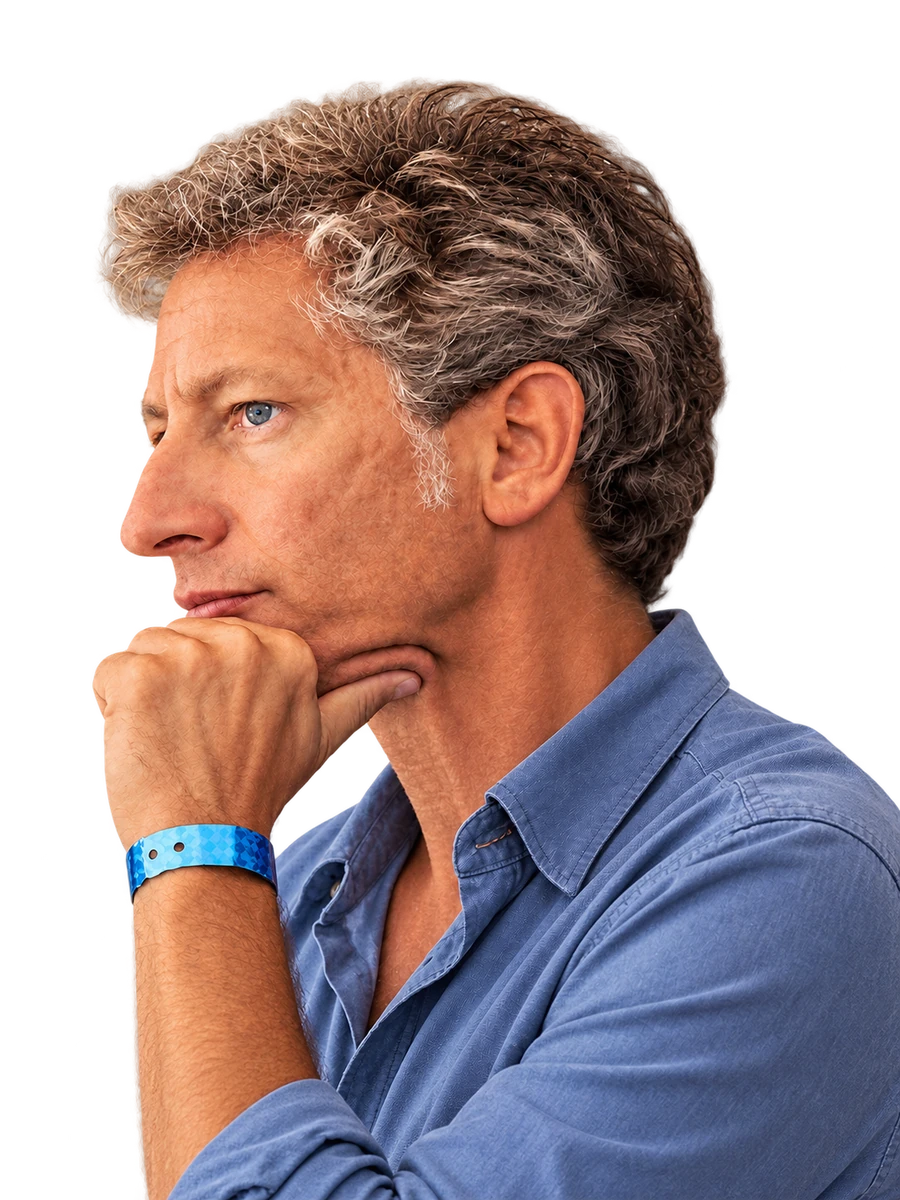
Alfredo Mazzone
Italy
Tango is by its nature revolutionary: an instant after it was born, it was already changing.
In tango, as a metaphor and sublimation of life, we all have the opportunity to be elegant without being superficial, charming without being vain, passionate without being vulgar... Let's not waste our opportunity!
Alfredo became obsessed with Tango in Buenos Aires in 2005. Since then he has been a constant part of festivals and marathons (among the most famous and exclusive in Europe and Argentina) without ever getting through a week without dancing.
Alfredo is one of the top collectors of tango music and owns an immense database. Passionate about history, he is also a profound music connoisseur and an expert in the evolution of music and dance through social transformations from the origins to the present day. During his countless travels he met legendary tango historians and artists (from Luis Adolfo Sierra to Eduardo Sibilin, Atilio Stampone, Alberto Podestà and Gavito).
As the musical and artistic consultant for many professional dancers, event organizers and DJs, Alfredo created Radio T25 in 2014: the first European online radio to broadcast 24 hours a day exclusively tango music and programs to spread tango culture. Through this project, he aimed to expand the back then limited number of songs used in milongas, bringing to public attention the unknown or neglected (even by the most famous DJs) orchestras which are absolutely suitable for dancing in milongas.
In 2015, requested by a group of DJs and organizers, Alfredo began to play music, at first rarely, only in friends' events, then eventually ranging from selected marathons and festivals (Bagaria, Wonder Tango Embrace, La Lanterna, Voluntad, Tango Land Fest, Paris Tango Weekend ...) to the best milongas of intimacy, from Buenos Aires (El Motivo) to Paris (Dolce Vita, El Garron, Oh-La-La), from Naples (Mumble Rumble, Salon Baires, TangoBar) to Genoa, Catania, Thessaloniki...
He loves to recall that De Caro conducted his orchestra from 1924 to 1954, which is the base period of reference for Alfredo's music choice, yet with full possibility to cross these boundaries whenever it is worth it. For Alfredo there is no milonga without D'Arienzo, Troilo, Calò and Laurenz.... and before playing something unknown he always asks himself if it is not better to play another tanda of Di Sarli. His djing is like the magma of Vesuvius, where his passion turns into poetry.
The following tango mottos are attributed to Alfredo:
Tango is by its nature revolutionary: an instant after it was born, it was already changing
If you know the rules and their reason, you can change them, otherwise yours will not be revolution but ignorance
The milonga is a place of absolute freedom yet no anarchy
I do not dance to be alone, but to be with you
In tango, as a metaphor and sublimation of life, we seek beauty and harmony: there we all have the opportunity to be elegant without being superficial, charming without being vain, passionate without being vulgar... Let's not waste our opportunity!
Playing at
- M18 Sunday milonga with shows — Sun 21:30
DJ
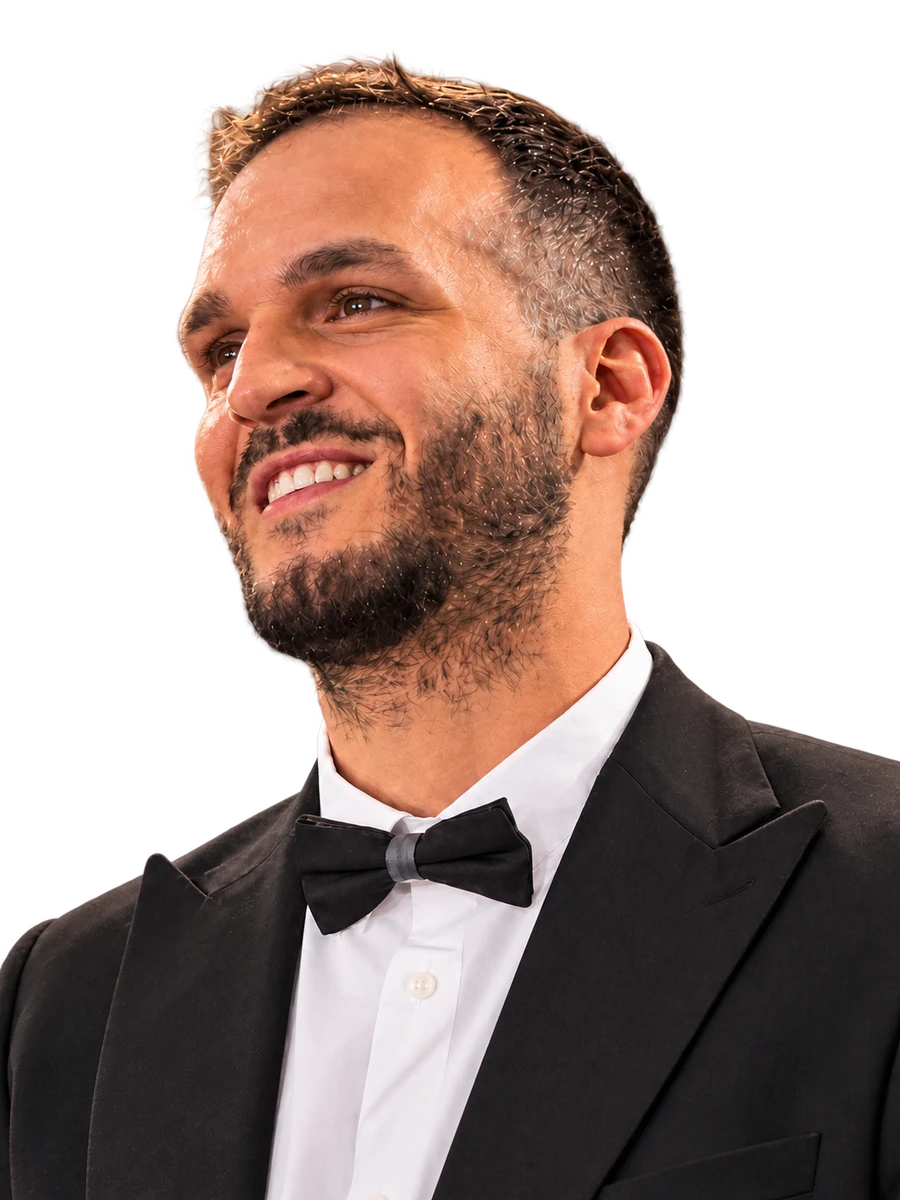
Panagiotis Triantafyllou
Greece
I think I DJ for one simple reason: I want people to dance.
For me, a good tanda has energy. It should make people want to get up, find someone, enter the embrace and stay there for the next three or four songs. I don't DJ simply to play music that I personally like. I DJ for the people on the floor.
I think of the DJ as someone who creates a journey without becoming the centre of it. The dancers should forget about the DJ. They should be listening to each other, responding to the music and enjoying the moment. My job is to give them the right environment for that to happen.
I love the energy that traditional tango music can create, and I care a lot about rhythm and feeling. At the same time, I enjoy bringing some freshness into the music.
One thing I particularly like is using newer orchestras that play traditional tango — not nuevo tango and not electronic tango, but contemporary musicians playing the old music with today's energy.
For me, this creates an interesting bridge. The music remains tango, but it doesn't have to feel like something frozen in the past.
I also enjoy thinking about how the different tandas fit together. I want the music to have a natural flow and to give dancers different kinds of experiences throughout the night. Sometimes the energy needs to rise, sometimes it needs to settle, sometimes you want to surprise people a little. But there should always be a reason for what comes next.
And there is one very simple test I have for a good tanda:
When the last song finishes, are the dancers still holding the embrace?
If they are, then something happened.
Maybe they loved the music. Maybe they loved the person they were dancing with. Maybe they simply didn't want that little journey to end yet.
Whatever the reason, that's what I'm looking for.
I don't want people to finish a tanda thinking about the DJ. I want them to finish it thinking about the person in their arms.
Ultimately, my philosophy is quite simple:
If people are sitting, I want to make them want to dance.
If they are dancing, I want to make them want to stay.
And when the music stops, I want them to need one extra second before letting go of the embrace.
Selected DJ dates: Maratangon, Skopje (2018) · Patras Tango Marathon (2022) · Tangueros Tango Marathon, Thessaloniki (2023) · Serenata Tango Weekend, Thessaloniki (2023) · Elegante Tango Marathon, Kyrenia (2024) · Warsaw Tango Meeting (2024) · Sultans Tango Marathon, Istanbul (2025) · Singapore Tango Marathon (2026) · Tango Mania, Istanbul (2026).
Playing at
- M19 After party — Mon 20:00
Venues
Danzstage
20/F, No. 148 Electric Road, Tin Hau
Dance Concept
7/F, Great Smart Tower, 230 Wanchai Road, Causeway Bay
All seminars @ Danzstage except Seminar B @ Dance Concept
Gallery
Videos
Videos from the event are on their way — check back soon.
Photos
Still Wondering
-
So, what’s this all about
-
In what way is this event different from another International Tango Festival with milongas, shows and workshops
 If you’ve read Question 1, you probably already know the answer. Feel free to put it in your own words. 😜
But here’s our short answer — or at least our attempt at keeping it short 😂:
All artists from different countries, styles, and approaches will come together as one closely collaborating team — teaching, performing, and even taking turns DJing — united by one shared idea:
EXCHANGEUnreserved knowledge exchange through first-hand demonstration, comparison and contrast, and open analysis of similarities and differences — with no fear of candid debate — in the classroom.
(At Tango Exchange, teaching is about empowering the student — whether that empowerment happens right there in the classroom, or months later on the dance floor.)
Unreserved energy exchange through music, shows, and social dancing — bringing the atmosphere to life, melting into the dance floor, and embracing the unfamiliar — in the milongas.
(They certainly won’t be sitting at a reserved VIP table all night, keeping their distance — they’re social-dance addicts themselves, so deeply hooked on tango that they ended up becoming professional dancers. 😜
In fact, before becoming tango professionals, or alongside their tango careers, some of them worked in scientific research, while others worked in engineering and R&D. These strong academic and professional backgrounds have naturally led them to develop scientific, systematic, and highly effective approaches to teaching tango.)
So you will share this constantly evolving, living conversation — TANGO — directly, interactively, engagingly, openly, with all of them.
-
Is Seminar F something like followers’ / ladies’ technique, and Seminar E something like leaders’ / men’s technique
Not at all! None of our seminars are divided by dance role, because every one of our teachers is a highly skilled open-role dancer!As Dilara herself puts it:
“I dance both roles, and this has changed my understanding of partnership profoundly. Experiencing tango from different perspectives has made me more aware of how much responsibility, sensitivity and creativity exist on both sides of the embrace. It has also strengthened my belief that tango becomes richer when we move beyond rigid ideas of what a leader or follower should look like.”
Unlike what you might expect from “traditional” technique classes, ours have nothing to do with gender or dance role. They are entirely about your interests and the content of each session.
The sessions are arranged this way simply because:
- Panos and Demetrio have things they would like to explore and share with everyone, such as technical principles, movement qualities, and creative strategies that make each person’s dancing distinctive.
- Dilara and Maria have things they would like to explore and share with everyone, such as the physical possibilities that allow expression to become freer, more precise, and more personal.
Everyone, regardless of gender or dance role, is welcome to join any of our technique classes!
The goal is not to reproduce a particular “style” or to leave the class dancing like any of our teachers. It is to leave with more tools to discover what your own tango can be.
Registration
Message our team on WhatsApp or WeChat with your name, your role (leader, follower, or flexible), and the seminars and milongas you'd like to join.

 Scan to add us on WeChat
Already registered? Log in to see your registration and ticket.
You can check the available time slots for private lessons below.
These are the private-class time slots still open. Tick the ones you'd like and tell us in your message — we'll confirm the times with you.
- One teacher HK$1,200 · two teachers HK$1,600
- Taking 3 or more? One teacher HK$1,100 · two teachers HK$1,400
|
Thu 15 Oct 11:00–12:00 |
Thu 15 Oct 12:00–13:00 |
Thu 15 Oct 13:00–14:00 |
Thu 15 Oct 14:00–15:00 |
Thu 15 Oct 15:00–16:00 |
Thu 15 Oct 16:00–17:00 |
Thu 15 Oct 17:00–18:00 |
Thu 15 Oct 18:00–19:00 |
Fri 16 Oct 11:00–12:00 |
Fri 16 Oct 12:00–13:00 |
Fri 16 Oct 13:00–14:00 |
Fri 16 Oct 14:00–15:00 |
Fri 16 Oct 15:00–16:00 |
Fri 16 Oct 16:00–17:00 |
Fri 16 Oct 17:00–18:00 |
Sat 17 Oct 11:00–12:00 |
Sat 17 Oct 12:00–13:00 |
Sat 17 Oct 13:00–14:00 |
Sat 17 Oct 14:00–15:00 |
Sun 18 Oct 10:40–12:00 |
Sun 18 Oct 11:00–12:00 |
Sun 18 Oct 12:00–13:00 |
Sun 18 Oct 13:00–14:00 |
Sun 18 Oct 14:00–15:00 |
Mon 19 Oct 11:00–12:00 |
Mon 19 Oct 12:00–13:00 |
Mon 19 Oct 13:00–14:00 |
Tue 20 Oct 11:00–12:00 |
Tue 20 Oct 12:00–13:00 |
Tue 20 Oct 13:00–14:00 |
Tue 20 Oct 14:00–15:00 |
|
|---|---|---|---|---|---|---|---|---|---|---|---|---|---|---|---|---|---|---|---|---|---|---|---|---|---|---|---|---|---|---|---|
| Dilara | – | – | – | – | – | – | – | – | – | – | – | – | – | – | – | – | – | – | – | – | – | – | – | – | – | – | – | – | – | – | – |
| Demetrio | – | – | – | – | – | – | – | – | – | – | – | – | – | – | – | ||||||||||||||||
| Maria | – | – | – | – | – | – | – | – | – | – | – | – | – | – | – | – | – | – | – | – | – | – | – | – | – | – | |||||
| Panos | – | – | – | – | – | – | – | – | – | – | – | – | – | – | – | – | – | – | – | – | – | – | – | – | – | – | |||||
| Dilara & Demetrio | – | – | – | – | – | – | – | – | – | – | – | – | – | – | – | – | – | – | – | – | – | – | – | – | – | – | – | – | – | – | – |
| Panos & Maria | – | – | – | – | – | – | – | – | – | – | – | – | – | – | – | – | – | – | – | – | – | – | – | – | – | – |